How to Build a Great First Lesson Without a Coursebook

The first lesson can feel like stepping onto a stage without a script. You don’t know your students yet, you’re unsure of their level, and there’s no coursebook to lean on. But that “blank page” is actually a gift: it lets you design a lesson that’s personal, flexible, and human.
The first meeting with a new group often sets the tone for everything that follows. When there’s no book to follow, it might seem challenging at first — yet it gives you the freedom to connect, observe, and adapt. You can build your first class around real communication rather than fixed exercises, creating an atmosphere that feels natural and welcoming.
Here’s how to make your first class both structured and spontaneous — even without a single printed page.
1. Focus on Connection, Not Correction
Your first goal isn’t grammar — it’s connection. The first impression your students get should be that English lessons are a place where they can speak, laugh, and be themselves. Creating a relaxed atmosphere will make students feel safe to use their English freely, even if it’s imperfect.
Start with light and interactive tasks that let students share small pieces of themselves. This breaks the ice and shows that mistakes are part of the learning process.
Try this:
-
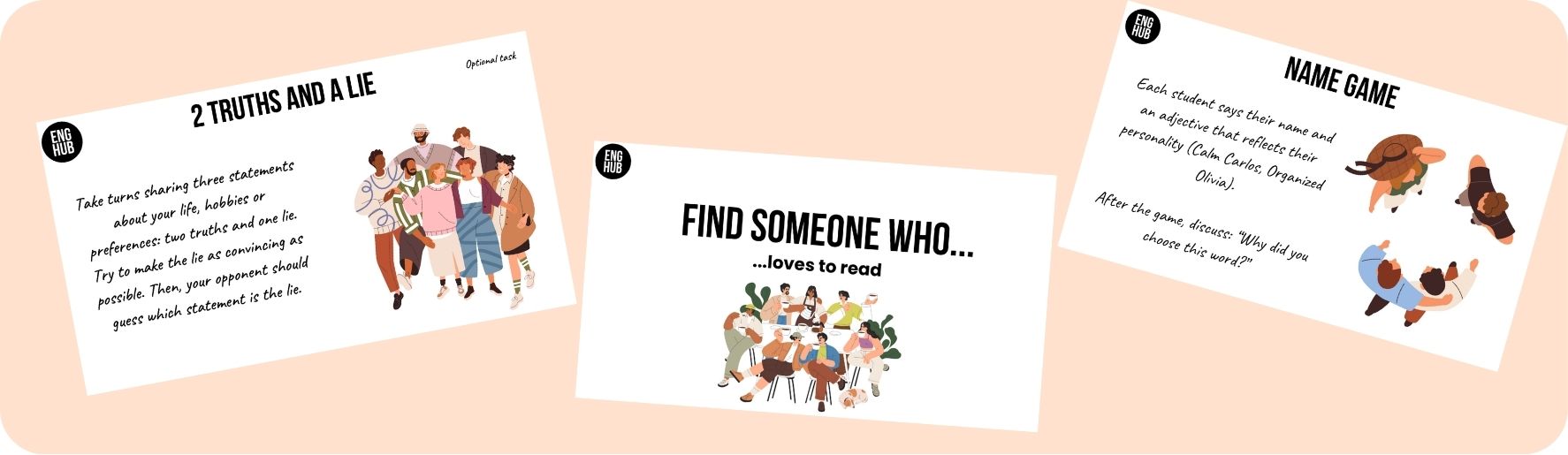
Name Game: Each student says their name with an adjective that describes them (e.g. Creative Kate, Musical Mike, Positive Paul). The next student repeats all previous names and adds their own. It’s a simple way to practise memory, rhythm, and pronunciation while building a friendly environment.
-
Find Someone Who…: Prepare a grid with fun prompts like: Find someone who has a pet, Find someone who likes spicy food, or Find someone who can play a musical instrument. Students mingle and talk to complete their grid. It gets everyone moving, chatting, and discovering what they have in common.
-
Two Truths and a Trick: Each student thinks of three sentences about themselves — two true and one made up. They share them in any order while classmates guess which one is false. Encourage students to ask follow-up questions (“Really?” “Where did that happen?”) before revealing the answer. This not only brings laughter but also builds listening skills and genuine curiosity.
These simple activities already tell you a lot about your learners — who’s confident, who’s shy, who enjoys humour, and who needs more encouragement. They help students relax, build connections, and see you as someone approachable and supportive.
2. Check Levels Naturally
Instead of giving students a formal test, integrate a mini level check into warm-up tasks. The first class should feel exploratory, not evaluative. Students often perform better when they’re talking about something meaningful rather than filling blanks.
Natural conversation gives you far more useful information than a placement quiz ever could. You can hear how comfortable they are with basic grammar, vocabulary, and pronunciation while keeping the mood friendly and relaxed.
Try this:
-
Picture Talk: Show a photo — perhaps a
 busy market, a park, or a family dinner. Ask open questions like “What can you see?” “What are people doing?” “What might happen next?” You can quickly assess grammar, vocabulary, and fluency without them realising it’s an assessment.
 -
Question Chain: Start with one simple question, such as “What did you do last weekend?” After answering, each student asks a new question to another person. The conversation moves naturally around the class. You’ll hear a variety of tenses, pronunciation, and creativity.
-
One-Minute Talk: Give each student a light topic — My favourite food, A typical day, My hobby, A place I love.
-
They speak for one minute while you take notes. Praise effort, not accuracy. Students feel heard, and you get an authentic snapshot of their level.
This approach replaces the anxiety of testing with natural communication — exactly what you want from your first meeting. It also shows students that you’re interested in them as people, not just as learners to be assessed.
3. Let Students Lead the Talk
From the very first lesson, show your learners that the classroom belongs to them, too. Student-led activities build confidence, responsibility, and collaboration. The more students speak, the more ownership they take of the learning process.
Giving them small leadership roles helps you create an interactive and learner-centred atmosphere right from the start.
Try this:
-
Student Interviews: In pairs, students ask each other a few open questions:
-
Why are you learning English?
-
What’s easy or difficult about English for you?
-
What do you want to be able to do in English in six months?
Afterwards, each student introduces their partner to the class. This helps everyone practise listening and speaking while giving you insight into goals and personalities.
-
Daily Life Bingo:
Give students a “Daily Life Bingo” card filled with everyday activities such as eat breakfast, go for a walk, check emails, watch movies, or read a book.
Students work in pairs or small groups and ask each other questions using time expressions like in the morning, in the evening, or every day (e.g. Do you drink coffee in the morning? Do you go for a walk after dinner?)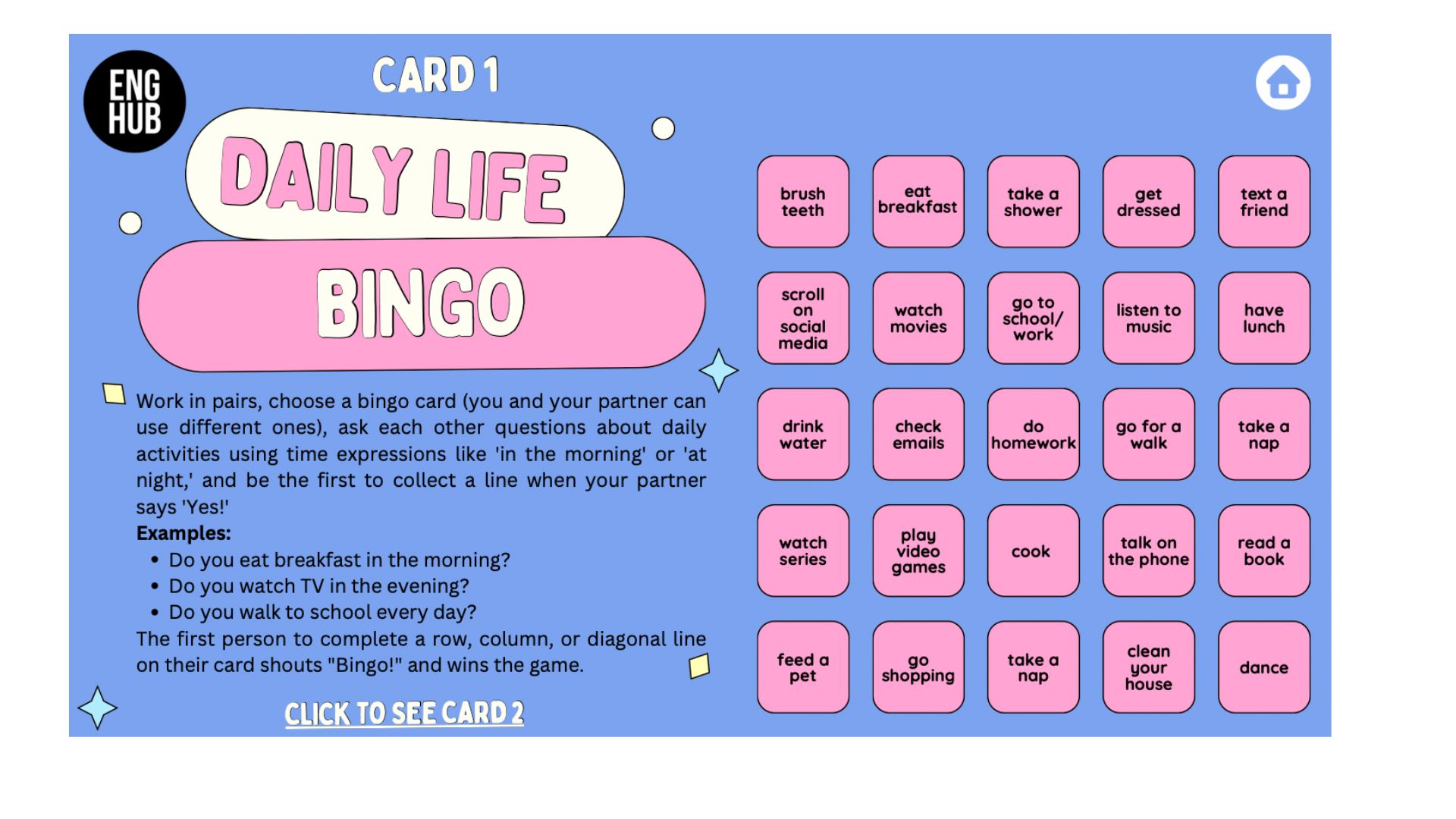
When a partner says “Yes!”, they mark that square. The first person to complete a row, column, or diagonal line shouts “Bingo!”
This activity gets everyone talking naturally, recycling useful daily routines vocabulary and simple present tense in a fun, relaxed way. -
Teach the Teacher: Each student teaches the class (or you) one small thing — how to make perfect tea, a local expression, a simple dance move. It reverses roles in a fun way and highlights the value of everyone’s experience.
These tasks turn your classroom into a place where every voice matters. They also send a strong message: in this class, learning is something we do together, not something the teacher simply delivers.
4. End with Reflection
A strong closing creates a sense of progress, even after a single hour. It helps students leave motivated and positive, feeling that they have already learned something and belong to the group. Taking a moment to reflect helps consolidate learning and gives you feedback for future lessons.
Try this:
-
One-Word Check-Out: Ask each student to say one word about how they feel at the end of the class (fun, motivated, hopeful, tired but happy).
-
Exit Slip: Give out small slips of paper. Collect them to plan your next lesson. Students complete:
-
One thing I learned today
-
One question I still have
-
One thing I’d like to do next time
-
Postcard to Future Me: Ask students to write a short message to their future selves: “By the end of this course, I hope I can…” Return these at the end of the term — it’s a wonderful reflection tool.
End with a smile and a sense of community. You’ll be surprised how much students remember that feeling in the weeks that follow.
Final Thoughts
You don’t need a book to stay organised. A simple structure:
Warm-up → Level check → Student interview → Reflection — gives you enough to fill the first hour with purpose and warmth.
The best “no-coursebook” lessons aren’t about missing materials; they’re about making meaningful moments. When your first class helps students feel seen, safe, and motivated, you’ve already built the foundation for a great course.
Remember: all you really need is a plan, a marker, and a genuine smile.